
The Case for Folk Arts
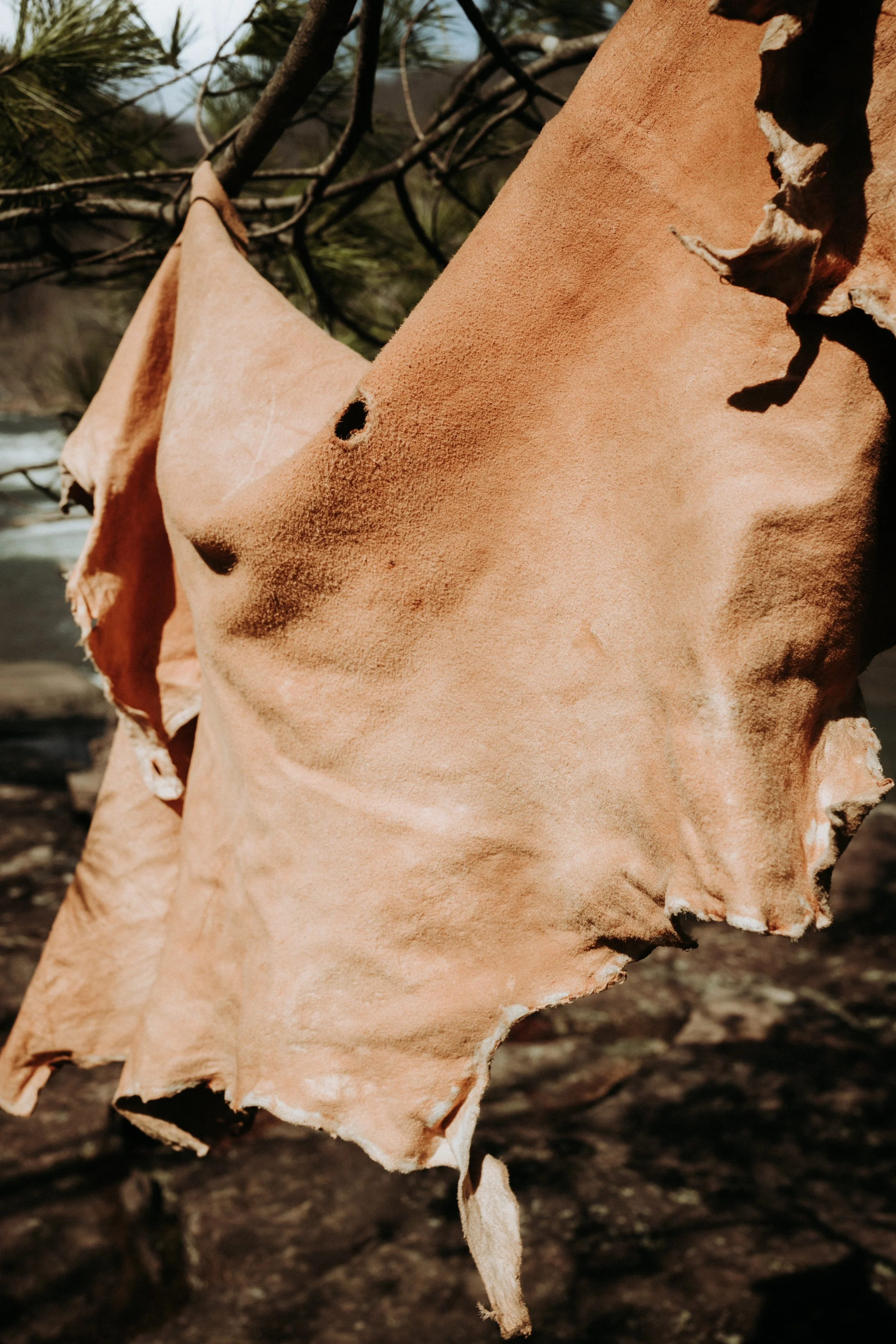
My most recent buckskin, completed winter 2026.
(Photo credits: Summer Fed Photography)
Modern Problems
The rhythmic thunk-scrape of my fleshing knife echoes through the cool October air, reverberating through my bones. A light rain pats the deer hide draped before me on a long beam.
I am graining—a process in tanning where the fur and outermost skin layer are removed. This step, while physically demanding, is needed to create the soft, stretchy buckskin we tanners are after.
The process of making buckskin engages almost every felt sense (and many lesser-used muscles). So many of us are becoming increasingly distanced from these sensory experiences.
I first learned of the term “analog core” in a New Yorker article published this summer. It is a growing digital trend where viewers witness tactile sensation in clips of “intricate physical handiwork”.
The article quotes author Ian Bogost: “The way we consume such content, by swiping idly on a glass screen, stands in stark contrast with the content of the content, the skillful manipulation of resolutely tangible material.”
It is satisfaction removed from lived experience.
Ancient Solutions
Practices like hide tanning are in our DNA. This is how our ancestors clothed themselves, cared for their communities, shared their culture. I believe that a reconnection with folk arts can be an ingredient in the medicine we so desperately need in this digital age.
Technology has helped us as a species in many tangible ways. Without it, I would never have connected to people from distant places who taught me how to make buckskin and weave baskets.
It has a place in our lives, but it cannot replace real encounters with the physical world.
When we make, we are grounded in the process of creating. Folk arts engage us with our environment in ways that increase our gratitude for the seemingly ordinary.
Just this morning, I smiled at a long stretch of cattails on the highway. I knew where to go next time I wanted to weave a cooling mat for these hot Midwestern days. I can picture it now, feel it on my skin.
The gentle scrape of leaves over and under, over and under as a bundle of green becomes a place of rest.
No screen can replace that feeling.
Sources
https://www.newyorker.com/culture/infinite-scroll/has-tech-robbed-us-of-our-sensory-lives
